Give a fish and hunger fades. Teach the hands and lives are changed.
This holy season, we are called To give in ways that lift us all—
A garden starts with just one seed, A helping hand, a caring deed.
Not only for a single day, But for the years that stretch away.
ThroughGifts for Life, our giving grows: In seeds and tools, in skills bestowed.
A bike to ride from home to home, So helpers travel, not alone.
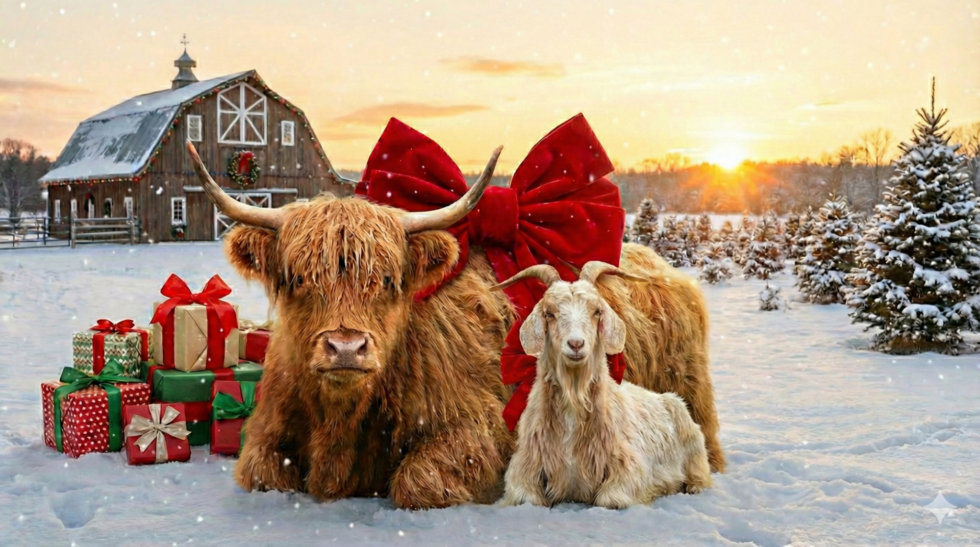
A goat, a cow, some chickens too, Milk and eggs and futures new.
In fruit trees planted, strong and wise, With mango, banana, and other surprise.
A hive that hums, sweet honey made, A classroom bright where fear can fade.
In mothers cared for, babies fed, In water clean, in hopes widespread.
In learning sparked, in labor shared, In dignity restored through care.
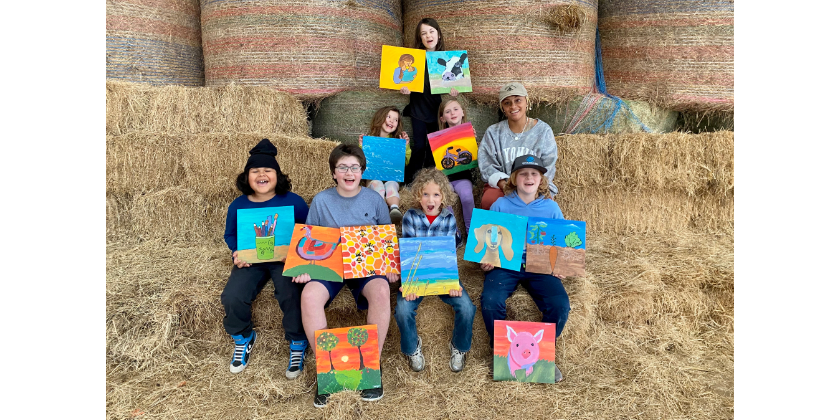
We give with joy, and in our view, The children’s art shines bright and true.
Small hands creating, spirits brave, A lasting gift of love we save.
May what we give continue on, Long after Christmas lights are gone.
A lasting gift from open hearts— This is where the harvest starts.
Give today, and help a family thrive far beyond the season.
Giving That Carries Forward
The children atOld Mill Creek Schoolhouse at NL Headquarters wanted their holiday generosity to live past Christmas morning, to meet real needs, and to support families in ways that last. Through a partnership with Episcopal Relief Fund’s Gifts for Lifeprogram andSt. Cecilia’s Round Top, that hope has finally taken shape.
Through this outreach, donors can support families with life-giving resources like livestock or beehives that provide nourishment and income long after the holidays have passed. In return, donors receive a small keepsake featuring a child’s artwork from Old Mill Creek Schoolhouse. It is a simple token that holds two stories at once – a family supported with dignity, and a child who learned that generosity can create lasting change.
I love the lights, the music, the excess, the nostalgia. I love the way the season invites joy and grief to sit side by side without asking either one to leave. I love the familiar rituals and the childlike wonder, and the sacred and the commercial all tangled together.
I also love the story at the heart of it all because it speaks about what it means to bring something precious into the world and protect it with your life.
There are two experiences in my life that have shaped the way I understand this season—being pregnant and giving birth.
Loving Pregnancy, Knowing Labor
I loved being pregnant. Every part of it.
I loved the connection with my baby, and the sense of growing life inside my body. I loved the emotional openness of pregnancy, and the tears that came easily and without apology. Even when I lost weight during my first trimester because I could barely eat, I remember feeling grateful for every wave of it. It felt extraordinary to carry life, and to participate so intimately in creation.
Birth was different. It was hard in ways I was not prepared for. My first labor lasted fifty hours, and somewhere in the middle of it, it became unmistakably clear: there was no quitting and no going back.The only way out was through.
Childbirth is one of the few human experiences where control simply falls away. When it becomes overwhelming, there is no opting out and no negotiating a different path. You move through it, or you do not survive it. That reality is what makes birth so profoundly transformative.
And when choice gives way to surrender, I find myself thinking of Mary.
The Mary We Rarely See
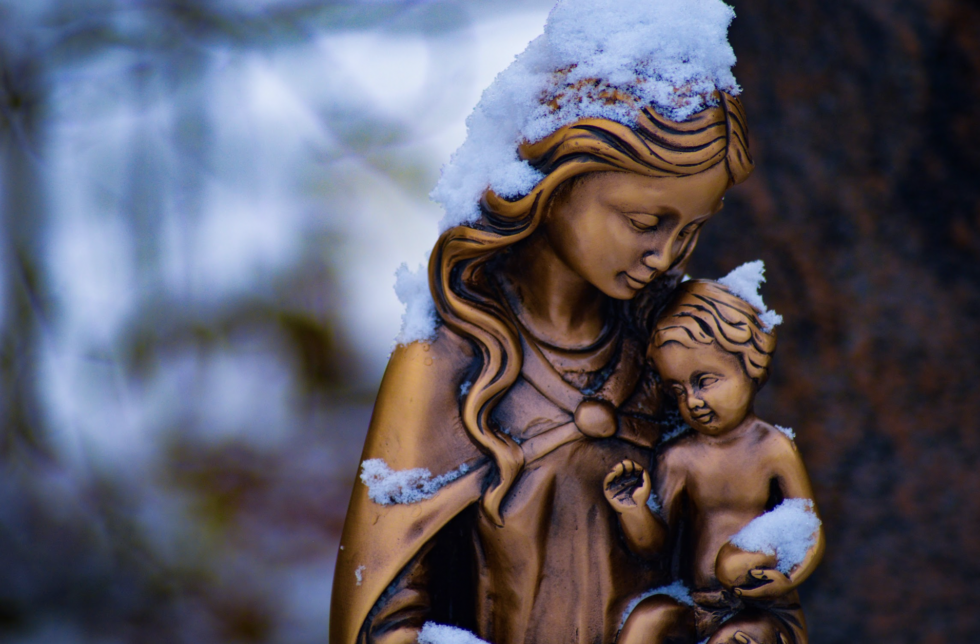
Mary is often described as humble, meek, obedient, modest, and serene. She is usually portrayed as calm and composed, as if the physical reality of her experience were incidental to the story being told. I believe she was humble, and I believe she was faithful. But these portrayals tend to soften her story in ways that overlook the depth of what she endured and the strength required to carry it.
Some Christian traditions teach that Mary experienced no pain in childbirth, a belief shaped by centuries of theological interpretation. While meaningful within its context, this view can distance us from the lived reality of birth itself. It shifts the focus away from the effort, risk, and surrender involved in bringing new life into the world.
There is another image of Mary that appears far less often. It comes from Revelation 12, a passage rarely associated with Christmas. Here, Mary is depicted as a woman clothed with the sun, the moon beneath her feet, and a crown of stars upon her head. She is pregnant and crying out in pain as she gives birth, while a great dragon stands before her, threatening the life she carries. This is not a peaceful or sentimental scene. It is charged with danger, intensity, and fierce protection.
But this is the Mary I recognize – a woman in labor, exposed to risk, standing between harm and love.
Vulnerability That Demands Strength
Vulnerability is often misunderstood. It is frequently framed as openness without power, or exposure without protection. But the vulnerability Mary embodies is altogether different. It is the kind of vulnerability that requires strength.
Mary said yes to a calling that would cost her comfort, safety, and certainty. She carried that yes in her body. She rode a donkey nearly one hundred miles while nine months pregnant. She gave birth on the ground of a barn, a place where there’s dirt, hay, animals, and all kinds of filth. It offers no privacy and certainly no comfort.
Despite all that, she remained present, grounded, and devoted, meeting each moment as it came with a strength that did not harden her, but carried life forward.
God Chose Vulnerability
Jesus entered the world, not with force or certainty, but through dependency. He arrived as a newborn who could not survive without care. Just like any other human baby, the baby Jesus arrived utterly reliant on others. Just like any other baby, the baby Jesus needed to be held, fed, and protected. Most importantly, his survival depended entirely on relationship.
To come into the world as a child is to accept exposure, uncertainty, and risk from the very beginning. It is to trust that love will meet you where strength cannot. In this telling, vulnerability is not something to be avoided or overcome. It is the doorway through which life enters.
Mary’s role mirrors this same truth. She did not simply assent to an idea or belief. She agreed to carry vulnerability in her own body. She agreed to labor, to protect, to nurture, and to remain present through fear and uncertainty.
All these teach us that love does not arrive fully formed or self-sufficient. It comes into the world needing care. It grows through relationship. And it asks something real of those who say yes to it.
What It Takes to Birth Something
Whether you understand the Christmas story as history, parable, or sacred myth, it carries a truth that extends beyond belief systems:anything worth birthing requires vulnerability.
…to remain present when things become uncomfortable or frightening; and
…to understand that there is no meaningful creation without some form of labor.
In this field, each one of us is called to give birth to something. We do this work because we have said yes to something larger than ourselves. That yes asks us to stay engaged when the cost becomes clear, when the path narrows, and when the only way forward is through.
This Season That Asks Us to Remember
This is what I believe the Christmas story offers us:
Love involves risk. Creation involves labor. Vulnerability and strength are not opposites. They are inseparable.
Mary was gentle, but formidable. She was faithful, but also fierce.
This season invites us to see vulnerability more clearly. Not as fragility, but as love lived through the body, through risk, and through devotion.
However you hold this story, may it remind you of what it truly takes to birth something meaningful, to protect it, and to nurture it into the world. And may it help you honor the strength required to stay present with what you love, even when the path forward demands everything you have.
Happy Holidays, and may you find peace in the love you are carrying and tending this season and beyond.
We give more during the holidays than at any other time of year. We donate. We shop. We look for ways to express care and gratitude through tangible gifts. The season opens our hearts, often in beautiful ways.
And yet, while generosity peaks during the holidays, the needs people face do not follow a seasonal calendar. Most families who are struggling were struggling long before December arrived.
As part of their learning, they spent time researching the ethics of holiday giving. They asked honest, thoughtful questions:
Why does giving increase so dramatically in December?
Why does the need remain steady throughout the year?
What makes a gift truly helpful, not just meaningful in the moment?
What they discovered shaped everything that followed.
Thinking Beyond the Moment
The children learned that while generosity increases during the holidays, hunger, poverty, and instability do not follow the same seasonal rhythm. That realization stayed with them.
They wanted to help, but did not want to give in a way that felt temporary or symbolic. They wanted to do something that would last – something that would support families long after Christmas morning.
In their words, they wanted a gift that keeps on giving – a lasting gift.
That search led them toGifts for Life (by way ofSt. Cecilia’s Episcopal Church in Round Top, Texas), a program of Episcopal Relief Fund that focuses on sustainable, dignity-centered support for families. Instead of short-term aid, Gifts for Life offers tangible resources like livestock, beehives, and farming tools, along with training when needed, so families can build income, nourishment, and long-term stability.
For the children, the appeal was simple and practical. A goat could help a family earn income and meet daily needs. A cow could strengthen food security in a lasting way. A beehive could provide ongoing income through honey. Each gift carried the possibility of continuity rather than consumption.
Where Art Meets Impact
Once the children chose the gifts they wanted to support, they looked for a way to invite others into the project. They turned to art.
Each child created an original drawing inspired by a Gifts for Life offering, and those drawings were transformed into small magnets that include information about the gift. When someone supports a family through Gifts for Life, they receive one of these magnets as a simple reminder of the connection they helped create.
The response was immediate.
People were drawn to the chance to support families in a lasting way. Grandparents purchased gifts in honor of their grandchildren, and families used the magnets to spark conversations about generosity and responsibility.
Long after the holidays ended, the artwork remained visible, quietly telling the story of what had been made possible. By the end of the season, this small school community in partnership withSt. Cecilia’s Round Top, had raised more than $7,000. Seeing that impact mattered for the children. Their ideas had traveled far beyond the classroom and that understanding stayed with them.
Growing the Vision This Year
This year, the project has grown alongside the children.
In addition to new artwork representing additional Gifts for Life options, the children have created full-size drawings that are now available as framed prints through a silent auction. All proceeds from the auction go directly toward funding Gifts for Life. If an auction raises more than the cost of a single gift, the additional funds simply purchase several gifts, supporting more families through the same life-giving program.
Most importantly, the children will be able to see the total raised. They will know what their work made possible. After all, children deserve to understand their impact. They deserve to see that their ideas, creativity, and care can move beyond intention and into real change.
Choose a Gift That Gives Life
This season, you are invited to take part in the work these children have been shaping with care and intention.
Each gift below supports a family through Episcopal Relief Fund’s Gifts for Life program, offering sustainable resources like livestock and beehives that help meet daily needs while building long-term stability. When you choose a gift, you will receive a piece of original artwork created by a child from Old Mill Creek Schoolhouse, a small but meaningful reminder of the connection you helped create.
You may also choose to participate in thesilent auctionfor framed, full-size prints of the children’s artwork, with all proceeds supporting Gifts for Life and extending the impact even further.
If you feel drawn to this work, we welcome you to take part. Your choice helps families build stability and allows children to see the impact of what they have created.
Thank you for being part of this story, and may this season bring warmth, meaning, and care into your days.
TWO WAYS TO GIVE: This Holiday Give the Gift of Sustainability
Bid in our Silent Auction to own aframed print of the children’s artwork!
All proceeds go toGifts for Life via St. Cecilia’s, so the kids can see the difference they’re making.Click here to bid!
Give online and receive amagnet featuring the children’s artwork
Donateonline via St. Cecilia’s (choose“Gifts for Life”at the very bottom of the drop down menu) or give cash/check at St. Cecilia’s in Round Top, Texas.
After you have donated,fill out this formtelling us how much you donated and which gift you want to buy so we can send you a magnet featuring the children’s artwork and make sure your money goes to the correct gift.
Double your impact! Gifts for Life is matching donations up to$1 million this holiday season!
Check out the available gifts below!
Provide Care for Moms and Newborns
$35 for one Mother and Child
Purchase this gift to connect expectant mothers with local health care providers and critical education programming about food and nutrition to keep both mother and baby healthy.
Artwork by Mabel Jobe ~ 7 years old (2025)
Give Fruit Trees
$35 for a share
Purchase this gift to provide fruit trees such as passion fruit, mango, avocado, and banana, which provide long-term sustainable sources of nutrition and income – and can be planted on hillsides for erosion control.
Artwork by Cooper Jobe ~ 11 years old (2025)
Give a Bicycle
$95 for one bike
Purchase this gift to help community volunteers in rural areas cover greater distances, reach more homes, and spend more time with their families.
Artwork by Adeline Forman ~ 8 years old (2025)
Give a Family Garden
$175 for one Family Garden
Purchase this gift to provide seeds, training, and education for families to created low-cost, low-effort kitchen gardens that produce fresh fruits and vegetables they can use to diversify the nutritional value of meals and generate income by selling surpluses.
Artwork by Hudson Forman ~ 11 years old (2025)
Provide Education for Children Affected by AIDS
$80 for one Child
Purchase this gift to bring trained volunteer teachers, school supplies, curriculum, and learning materials to pre-school children whose lives have been impacted by HIV/AIDS.
Artwork by Rocco Kenisell ~ 9 years old (2025)
Give Seeds, Tools, and Training
$45 for a share
Purchase this gift to help communities thrive with seeds, climate-smart agricultural training, and quality farm tools to cultivate a sustainable food supply.
Artwork by Silas Brewster ~ 6 years old (2025)
Give a Beehive
$35 for One Hive
Purchase this gift which leads to increased food security and helps provide their keepers with a reliable source of income.
Artwork by Cooper Jobe ~ 10 years old (2024)
Give a Cow
$65 for a Share
or
$630 for One Cow
With a milk-producing cow, a family has a steady supply of nourishment and can sell surplus milk to better provide for themselves.
Artwork by Mabel Jobe ~ 6 years old (2024)
Give a Flock of Chickens
$25 for One Share
or
$135 for One Flock
Purchase this gift as animals are often at the center of investment and income generation. Empower families to make their own financial choices with a flock of chickens to raise additional poultry and sell surplus stock and eggs in the marketplace.
Artwork by Cooper Jobe ~ 10 years old (2024)
Give a Pig
$20 for One Share
or
$100 for One Pig
Offer families financial security and access to food by training them to raise and sell pigs, which reproduce quickly and are ready for market in just six months.
Artwork by Hudson Forman ~ 10 years old
Give a Goat
$80 for One Goat
Purchase this gift so a family may have a stable source of milk, cheese and manure for farming.
Artwork by Hudson Forman, 10 years old (2024)
Give a Gift of Clean Water
$35 for One Person
or
$215 for One Family
Purchase this gift to ensure access to the most crucial element of health and resilience – clean water – which prevents the spread of illness and deadly disease.
Artwork by Mabel Jobe ~ 6 years old (2024)
Give Today
Remember, there are two ways to give:
Bid in our Silent Auction to own aframed print of the children’s artwork!
All proceeds go toGifts for Life via St. Cecilia’s, so the kids can see the difference they’re making.Click here to bid!
Give online and receive amagnet featuring the children’s artwork
Donateonline via St. Cecilia’s (choose“Gifts for Life”at the very bottom of the drop down menu) or give cash/check at St. Cecilia’s in Round Top, Texas.
After you have donated,fill out this formtelling us how much you donated and which gift you want to buy so we can send you a magnet featuring the children’s artwork and make sure your money goes to the correct gift.
Double your impact! Gifts for Life is matching donations up to$1 million this holiday season!
One of the hardest things about working in the field of equine-assisted services is answering this simple question: “What exactly do you do?”
What I do as a licensed mental health counselor can feel like a riddle sometimes. When I tell people I integrate horses into the counseling process, their minds often jump to a common image: therapeutic riding. While therapeutic riding programs are wonderful and do amazing work, what we offer in equine-assisted mental health services is quite different.
Our Unique Approach
Imagine a conversation:
Curious Person: “So, what exactly do you do?”
Me: “I’m a licensed mental health counselor, and sometimes I integrate horses into therapy. We work on the same goals you’d pursue in a traditional office setting, like managing anxiety, depression, ADHD, or PTSD. The big difference? Our ‘office’ is often outdoors, and we approach those goals in a unique way with horses.”
Curious Person: “Oh yeah! I think there’s a program like that down the road.”
(Usually, they’re referring to a therapeutic riding program for children with special needs.)
Me: “That’s a fantastic program, and I actually spent over ten years certified in therapeutic riding – I love it! But our work is distinct. Therapeutic riding is an adaptive sport, focusing on riding skills and physical benefits. Our work, on the other hand, is about mental health and personal growth. About 80% of what we do happens on the ground, and our goals are never about riding or horsemanship skills—they’re rooted in mental health. They’re always about the client’s emotional well-being and relational patterns.”
It’s Not About Grooming (Mostly!) – It’s About Connection
Another common question surfaces quickly:
Curious Person: “So then what do you do with the horses? Just groom them?”
Me: “Sometimes grooming is part of it, but the core of our work revolves around the relationship between the horse and the person. We believe that true healing happens within the context of safe, connected relationships. The way that relationship is built with the horse is incredibly important.”
“We guide and support our clients as they learn to forge a deeply attuned relationship with a horse – one built on trust, consent, mutual respect, clear communication, appropriate boundaries, and genuine connection. These aren’t just feel-good words; they’re the foundational principles we practice every session.”
The ‘horse whisperer’ question almost always comes up, often with a slight giggle from my end.
Curious Person: “So, are you like a horse whisperer?”
Me: “Well, kinda. But I prefer to say it’s about horse listening. We learn to listen to the horse, and in doing so, we learn to listen more deeply to ourselves. Then, we learn how to respond intentionally and authentically to what we’ve heard.”
Now, as a professional in this field, I want to be clear: no self-respecting horse person claims to be a ‘horse whisperer.’ The term is Hollywood-glamorized and implies some secret, innate gift. However, I understand why the layperson uses it – it suggests a gentle, close, and seemingly magical communication with horses. And in that sense, it does get us closer to understanding what happens in our sessions.
You might observe a client asking a horse to follow them without a lead rope, simply through their body language and energy. You might see them walking in perfect sync or engaging in what looks like a beautiful dance as the client asks the horse to move away and then return. The communication is often subtle, nuanced, and incredibly gentle – so subtle, in fact, you might struggle to see it at all. Some might call this ‘horse whispering.’
Demystifying Attuned Relationships: The Heart of Our Mission
Here’s our core belief: Anyone can learn to communicate this way if they’re willing to do the personal work required. Attuned communication isn’t reserved for a gifted few. It’s learnable. It’s teachable. And most importantly—it transfers.
Our mission is to demystify attuned relationships, not just with horses, but with everyone. There are no hidden secrets—just sound relationship principles, practiced over time with support and intention. The profound lessons clients learn in building a respectful, consensual, and communicative relationship with a horse seamlessly transfer to all other relationships in their lives.
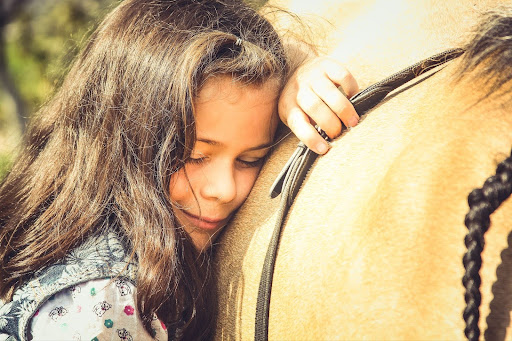
Horses are incredible partners. If we allow them, they will show us exactly how our internal and emotional states, and our resulting behaviors, affect others. With the right therapeutic support, they provide the perfect, safe space to practice new, healthier ways of being in relationship – with ourselves and with the people around us.
Ready to Experience the Power of Equine-Assisted Mental Health and Wellness?
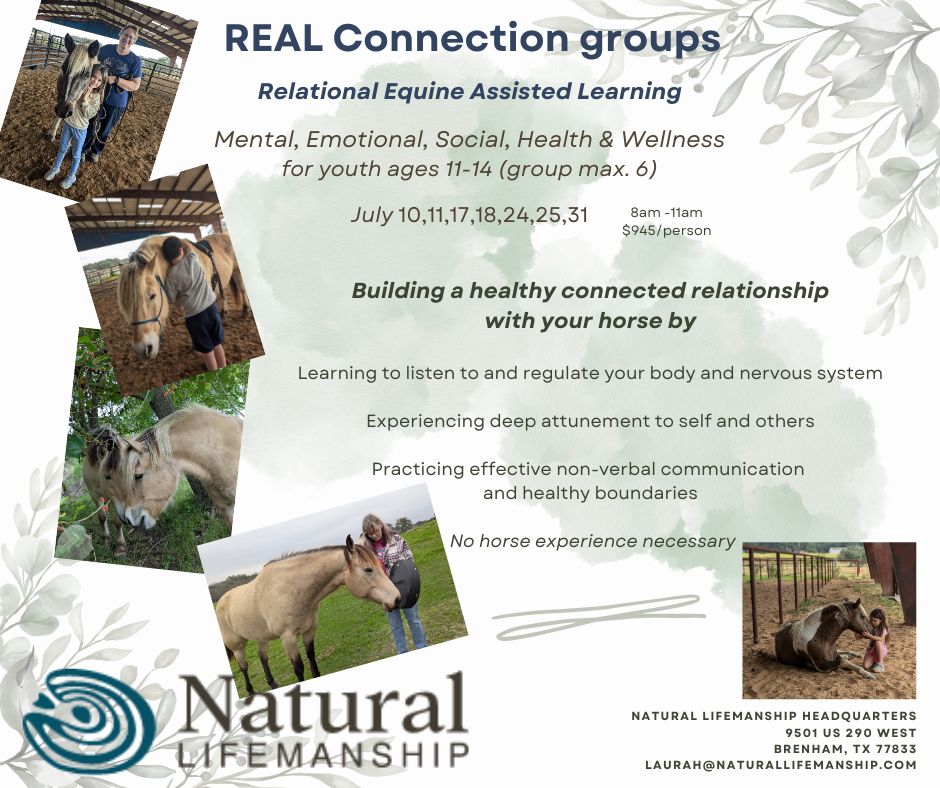
This summer, your family has a unique opportunity to connect and grow with Natural Lifemanship! As parents, we all want our kids to navigate the world with confidence, strong relationships, and a deep understanding of themselves.
That’s why we’re so excited to introduce our REAL Connection Groups for youth aged 11-14, our first local group offering, designed to foster essential mental, emotional, and social well-being.
Imagine your child learning to truly listen to their own body, to communicate effectively without words, and to build genuinely connected relationships – all while engaging with our incredible horses. Our Relational Equine Assisted Learning program isn’t about riding; it’s about building foundational life skills for Mental, Emotional, Social, Health & Wellness.
We believe that learning to build a healthy, connected relationship with a horse teaches invaluable lessons that transfer directly to their daily lives. And the best part? No prior horse experience is required!
Space is limited to just 6 participants per group to ensure a truly supportive and personal experience.
Details:
Who: Youth 11-14
When: July 10, 11, 17, 18, 24, 25, 31 (8am-11am)
Investment: $945/person
We believe everyone should have access to these transformative programs, which is why we also have limited, needs-based scholarships available.
Give your child the opportunity to connect, grow, and thrive this summer. Reach out to laurah@naturallifemanship.com with any questions or to enroll!
Notify Me
Get updates and more information on our upcoming programs for adults, children, and families by signing up here.
Something old, something new, something borrowed, something blue. My sentimental heart loves this sweet little rhyme.
I’m generally not superstitious, but I do love tradition. I find safety, connection, and predictability in this passing on of customs and beliefs. For generations, brides and grooms have abided by this list as a way to incorporate cherished people, objects, and memories into a sacred ceremony. Arguably, the most sacred of all ceremonies. A ceremony about new beginnings, new life, love, and commitment.
Rooted in Tradition
At our wedding, I wore my mother’s wedding dress, new shoes, and a turquoise necklace Tim had given me. Almost all of the decorations at our wedding were borrowed from many dear friends who contributed to our special day in precious ways.
When Natural Lifemanship formed a relationship with That’s the Dream Ranch, it was a new beginning for us, a wedding of sorts. This partnership is all about love and commitment and the building of a new life for our family, our business, and our community. The renovating and remodeling of the thirty year old, mostly furnished 12-bedroom inn, that we now call the NL HomePlace, was a labor of love – so much labor and so much love went into every single room. I have said many a time that each room has something old, something new, something borrowed, and something blue – like any sacred experience should.
So, what is meant by this little rhyme? This Old English rhyme dates back to the 19th century and all meanings are just theory, so here are mine.
Something Old
I’m a huge fan of antiques – objects with a story that tether us to the past. Sometimes it feels easier to just burn it all and start fresh, but when we do that we lose the wisdom of those who have come before us. The wisdom of our fellow travelers who have prepared the way for us – who have walked the paths we tread. We also lose the profound learning and joy that comes when we repair a relationship, a life. . . or an armoire. Throughout the Inn we have done the painful work of choosing what goes, deciding what to keep, and what needs repair. Each room has something old – something from the past to remind you that you are not alone. Something with a story.
Something New
There’s nothing like the smell of a new car, a new saddle, a new home. Let’s face it, the musty smell of something old is no joke. The ozone machine has become an important member of the NL team here at the ranch. Something new represents hope for the future and an acceptance of where we are now – what is. The new allows us to embrace change and progress and possibility. As we purchased new furniture, bedding, and artwork, I held the belief close to my chest that healing is possible and that the old can be repurposed in a way that plays well with the new.
Something Borrowed
We need each other. We need support. Something borrowed is about having the humility to ask for help and accept support and nurture from others. It’s also about community and family – the kind we create. I have always dreamed of living in a neighborhood, where I could run next door to borrow a cup of sugar or a stick of butter. It is our dream to create this kind of home for you. Each room has something borrowed – something our NL family has contributed to our grand purpose.
Something Blue
Specifically, turquoise. . . the NL turquoise. Well, this is just good taste! Need I say more?
Welcome Home
It is our deepest desire that when you come through the gates of the NL Headquarters, you feel something right away. When you step foot on our land and cross the threshold of your bespoke room, you feel an energy that prepares. An energy that pierces your soul and prompts your heart to say, “I am safe here. I am protected. I am ready – to learn, to grow, to heal, and to transform.”
It is our desire that this place, our HomePlace, prepares the way – for profound growth that even extends to those whose feet may never touch this land – those whose lives you touch. Your life is our legacy – a responsibility we take very seriously and hold with great tenderness.
We have prepared this place so that you may find what your soul seeks – maybe a new beginning, a bit of healing and growth, a renewed sense of love for and commitment to yourself and others. May you connect with the deep history of this place, and with those who have come before you. May you find hope. May you be supported and nurtured. And may you grow to love turquoise. . . because that’s just good taste. 😉
May you be at home here. May you find true belonging here, at your HomePlace.
Also, if you register for an in-person training at the NL Headquarters in Brenham, Texas before December 31st of this year you will get free onsite lodging in our little inn.
Mary carried a bag with a mixture of corn meal and tobacco leaves that each of us sprinkled along the entire perimeter of the property. Cooper played the drum and recited scripture that was meaningful to him. Mabel sang songs. I carried essential oils and anointed every door and every entrance as we said, “May all who enter here be blessed.” We were sweaty and at peace – covered in oil, cornmeal, and tobacco. We felt a sense of interconnectedness deep in our bones, as the mystery of a property blessing unfolded step by step.
Several months ago we decided that it was time to perform an intimate ceremony to help us to connect with our new place in the world. We did it for the land, for ourselves, for our family, and for every single living being who will ever find themselves on the land we inhabit.
She spent time in meditation and prayer and allowed her intuition, life experiences, cultural history, spirituality, and creativity to guide our experience. She encouraged us to do the same, to be spontaneous, trust our intuition, and do what felt right. Mary has ancestors who are Shawnee, Cherokee, and Powhatan, and she is a member of the Southeast Kentucky Shawnee. This heritage is very important to her.
Most of my ancestors come from Germany, and my Christian Faith and my relationship with my Creator is what feeds my soul and nurtures my intuition. All that we collectively hold sacred came together in a ceremony to set aside this land, that was gifted to us, as sacred land – a space dedicated to healing, growth, love, and peace for the people, the critters, the trees and plants, the water, and even the rocks that support our foundation.
It is my hope that when people come through the gates of our property, they feel something right away. They feel the veil lifted between the mundane day-to-day and the Divine. When people step foot on our property I pray that a healing energy penetrates their feet, spirals up their legs and pulses through their body – an energy that prepares. An energy that pierces the soul and prompts the heart to say, “I am safe here. I am protected. I am ready – to heal and to transform.” It is my desire that this place prepares the way – for profound growth that begins when people arrive and even extends to those whose feet never tread this land. It is my deepest prayer that the land itself carries a healing legacy.
So, with all of this in our hearts we created a ceremony that was ours.
What is Ceremony?
I love ceremony and I love the rhythm that ritual brings. We can do the ceremonies and rituals created by those who have come before us, connecting us through movement and similar practice, but anyone can create their own ceremony. What I love most about ceremony is that it often has a sensory component that allows us to do something physical and concrete to represent something more abstract or difficult to quantify. For example, in many wedding ceremonies the couple exchanges rings to represent their commitment to one another.
Ceremonies engage the body in matters of the soul. In our case, the ceremony we created represented our commitment to gratitude, reverence, and the setting aside of our place to make this world a better place – recognizing the new NL Headquarters as sacred land.
How did we create our ceremony?
We created a ceremony that was supported by our personal experiences and by those who have come before us.
Corn and tobacco were two of the most important crops where Mary grew up in Kentucky. Corn was important to feed the family and could be eaten year round. Hominy, corn relish, cornbread in various forms. . . my mouth is watering now. Corn was the main source of food for settlers and the First People. When Mary was a teacher they learned a native song called “Follow Mother Corn who Brings Life,” so when her spirit guides showed her cornmeal for our ceremony, it made sense.
For us and many of our ancestors, corn represented life – we used corn in our ceremony to represent new life for the land.
As a child, Mary’s family raised tobacco. She remembers getting a wasp sting and her granddaddy rubbing a tobacco leaf on it to pull out the pain. They hung tobacco in the barn where she played. If she had an ear ache, they would blow smoke in her ear to stop the pain. The First People honored tobacco as a medicine plant, so when she received the guidance to use the tobacco, it was a symbol for bringing back healing to the land.
We mixed cornmeal and tobacco leaves together and sprinkled them along the perimeter of the property to create a boundary – that all the land within the boundary begin to heal and find new life so it can support the healing and growth of others. Just like us, the land can only take others on a journey it is traveling.
In many ancient cultures, including our family’s Christian culture, oil signified prosperity, blessings, and stability. Oil was poured on people and inanimate objects to set them aside as blessed by the Divine – a sacred object or living being anointed to do healing work. Various cultures have poured oil over people, animals and objects as part of the healing process.
In our ceremony we set aside every doorway and every entrance as portals to fullness, purpose, and joy – “May all who enter here be blessed.” Also, as we have built a herd in our new place and as I have come to know each horse, I have, when it felt right, anointed them with oil. Simply an acknowledgment of their sacred and holy purpose in our family, as part of our business, and in our community. A physical representation of a sense of purpose and gratitude I hold in my heart.
We truly are preparing a place for you.
The next ceremony is for all of us
This first ceremony was mostly about us and the land. This move was hard. Our children have struggled. Our horses and other animals have struggled. Prior to our arrival, the land and facilities were neglected and abused. It’s always a long story, but so much loss and grief in the last year.
The second ceremony will be mostly about you and our little community. At our coming Sacred Landscapes conference, we will perform a ceremony similar to the first, but completely different – because each of you will bring something unique.
We are in the process of asking people from various cultures to contribute to and guide our time. We will honor those who loved and cared for the land before us. We have reached out to the Tonkawa Tribe, who inhabited this land. There are many immigrants who came before us here – such rich history. Many cultures will guide our community experience, but we will ask each of you to trust your intuition, honor your beliefs, and do what feels right as we engage in a multi-cultural property blessing.
Together, we will set aside this land for our larger community and for your larger communities. You will learn how to create ceremony in your communities and on your land as well. We invite you to (literally) walk with us as we reconnect with the land and all living creatures, and find a renewed sense of awe and wonder in our world. The property blessing, a family dinner, and live music with The Darling Daughters (one of our own!), is open to all Roots Pass Holders.
“Every act of creation is first an act of destruction.”
-Pablo Picasso
We often speak about the breaking down of something old, and the rebuilding of something new. A process of transformation. Of repair. Of renewal.
All of which are essential to healing and growth. All of which sound quite lovely, and maybe even trite. . . unless you’ve experienced the breaking down of something old. Literally or figuratively.
You see, a very important part of our growth journey, as an organization, is the longing for space. A deep and growing desire for a place to call ours. A place to invite others from around the world for healing, learning, connection, guidance, reflection, and ultimately renewal.
This place, which we’ve often constructed in our dreams, is finally being built. Yet in the process of actualizing the space that was gifted to us and that we, in turn, are gifting to others – we first faced destruction. Demolition of that which no longer served us, the horses, or the land.
NL Headquarters, Back Forty
The Demolition
In the physical sense, we first engaged in the demolition of over 100 horse stalls that represented an old relationship with horses, one that departs from the relationship principles that we hold dear.
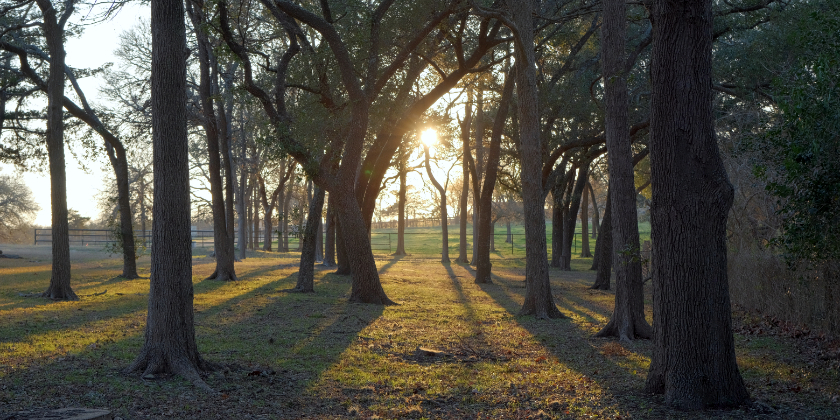
We tore down worn and tired buildings and fence to birth in their places more uplifting and inspiring spaces. While honoring wise and breathtaking trees, and the land that’s invited us here, we cleared dying brush and paved a road where hope could come, grow, and spread—departing back to its home.
The Destruction was Harder than I Expected
Call me naive, but I had this image of a huge wrecking ball knocking everything down, and WHAM! Just like that, the old is leveled. It wasn’t quite like that. It was much more slow and methodical and painful. Imagine squeaky machinery removing parts of buildings bit by bit.
There were moments of intensity, but taking down the old took much more time than I expected. And there was fallout – unintentional damage was done throughout this process. For example, water lines were busted and days were spent repairing this damage. And the clean-up, so much clean-up. . . This took even longer.
Once buildings were removed, the mark on the land still remained. The scar that shows what once was. Some parts of our land are now ready for healing and growth and the process of creating something new!
NL Headquarters, Back Forty
The Repair and the Creation
Honoring the belief that the land’s ability to offer and support healing is in direct proportion to how much the land itself is healed, we have enacted a plan that involves continual pruning, healing, growth, and creation.
We, as people and living beings, heal in the same way the land heals. Sometimes structures that no longer serve us must be identified, broken down, and removed. And it takes the time it takes. No quick fixes or wrecking balls.
My clients are the most amazing and brave people I know. I love it when they reach out to me because they’re ready to do the hard work of healing, and I often remind them that “hurry up and heal” isn’t really a thing. You can’t rush your healing (a song I recently learned from one of our Rhythmic Riding participants).
I have also recently experienced that there are consequences to rushing the destruction and the clean-up. Destruction that is necessary to make way for creation.
Through our collaboration with That’s the Dream Ranch the entire place is beginning to heal.
NL Headquarters, Hay Field
Land is resting and grass is growing. New fences are being built. A new well has been dug. Ponds are being developed to manage erosion. New septics, new windows, drywall, air conditioning units, and on and on.
We are currently in the process of refurbishing the inn, where our guests can rest—and just like caterpillars—prepare for their own metamorphosis. That is, their own destruction and rebuilding.
It is our humble hope that all who enter our gates will experience the safe breaking down of that which no longer serves them and the slow healing and deliberate creation that follows.
People searching for transformation—for themselves and for their clients.
People like you.
Communities like ours.
We look forward to both the demolition and the rebuilding that we will do together as a community.
“We believe in the important work of Natural Lifemanship and have been coming together in prayer about how we can help you expand. Could we help you get a place for your headquarters?”
A place.
A gift of place. . .
This was the beginning of a conversation Tim and I had with Dawn and Ron Robson, with That’s the Dream Farm, over a year ago. This was the beginning of the promise of land––of a place to shape and form and transform us––all of us. Here a powerful partnership and kinship began.
These words put into motion a sacred promise for, and to, our growing community, because place builds people. Place builds tribes. The longing for and love of place is profoundly human, and akin to our most basic need for belonging.
We Had No Specific Place
For years people have told us that they wanted to come to a training at “The Natural Lifemanship place.”
The problem? We have never had just one place.
Through the years over 50 different people/organizations have hosted our trainings. They have cared for us, contributed to the accessibility and furthering of this powerful work, and rich relationships have been built. Indeed, many of my closest friends were met through these partnerships.
However, in 2020 much of our training was moved online as we pivoted during the Pandemic. This allowed for a depth and breadth of learning not possible before.
The shift to online learning was great. . . mostly.
As more and more connections and communications were made virtually, I felt untethered at times. We found ourselves longing for an NL home like never before. In our increasingly virtual world, we learned that place matters now more than ever.
More than ever.
Not just any kind of place but one we can call home—and one we can build with you in mind.
(By the way, regional trainings at our amazing partner sites will certainly continue.)
Place Matters
Intuitively, we know that place matters, that the actual land on which we stand shapes us and that we shape it. Eric Weiner, author of The Geography of Bliss, says that “Where we are affects who we are.” He has spent many years researching how our actual location affects our creativity, our spirituality, and our happiness.
We find that at certain places time is expansive and connection is all that matters. These places change us and gift us the inspiration needed to create; a work of art, a new relationship, a new life. We are inspired to heal and guide others as they do the same.
The wide open spaces in the Panhandle of Texas, the Grand Canyon, Hanging Lakes in Colorado, the waters of Juniper Run, the castles of Germany, and the mountains of Austria are some of these places for me––sacred ground that has the power to transcend our relationship with time, with ourselves, and with the Divine.
I believe sometimes the very ground calls out “come here and be transformed.” These are the places that tether us to each other, to this life, to those who came before us, and those who will follow.
We need places like this.
Place Deepens Connection
Tim often tells the story of when his oldest daughter moved to Utah and he had not yet seen where she was living. His mind was not at peace until he visited her and saw the places in which she moved on a daily basis. He needed to see and feel her home. He felt uneasy until he could place her when he thought of her.
I too have felt this with our children. Sending our kids to school during the pandemic was just gut-wrenching, partially because we could not see where they would be spending their day.
Both of our children have done better with separation when they have seen where we are working. Our little girl once said with tears in her eyes, “but I don’t know where you’ll be!,” as I left for work. Our internal sense of connection and safety is stronger when we can place others.
Eric Weiner cites research done in Finland that found that 82% of phone conversations contain some version of the question “Where are you?” If I’m on a zoom call in a new environment, people almost always ask me “Where are you?”
Why do people ask this? Why does it matter?
Why do people ask to train at “The Natural Lifemanship place?”
I think it’s because we can better connect when we can place the person with whom we are seeking connection. For example, I find it harder to connect with a person who has a fake or blurred out background on zoom. By contrast, at our virtual Grief and Love conference we wanted a very intimate, community experience so I met with attendees in our living room.
We are not just individual beings wandering the world, but connected creatures existing in a specific context. Our context matters. Where we are, how we connect with the environment around us, the places that we belong to—all influence who we are, how we feel, and how we connect with each other.
Connection is predicated on finding our place and allowing ourselves to be placed. It is our hope that moving forward, as an organization, you can always place us.
So, a Place Was Purchased
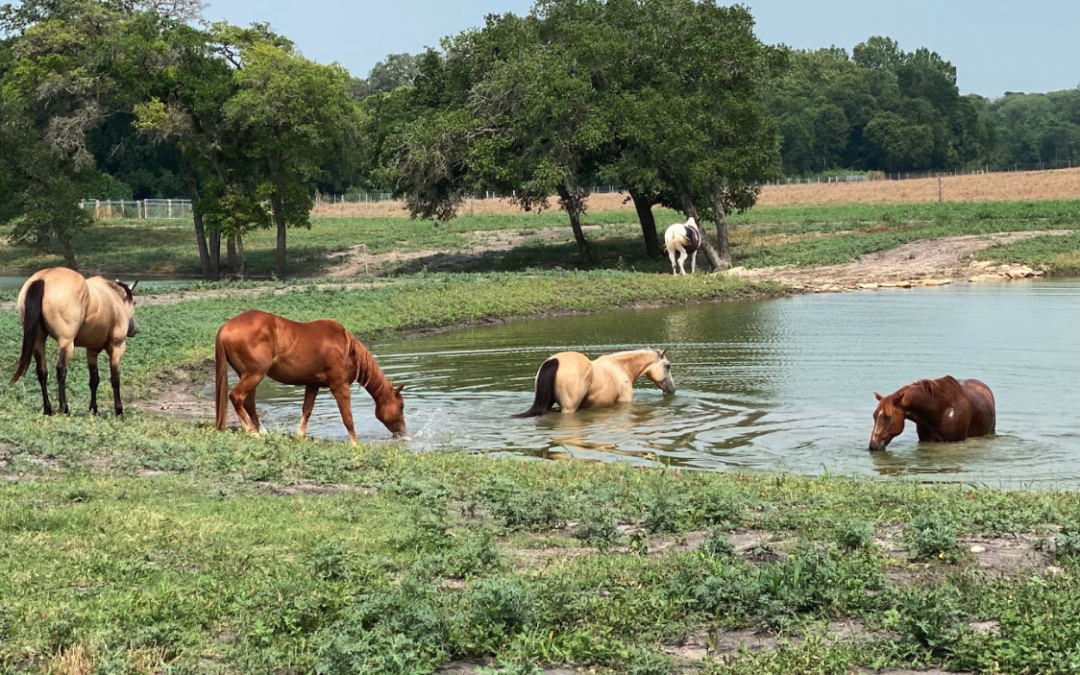
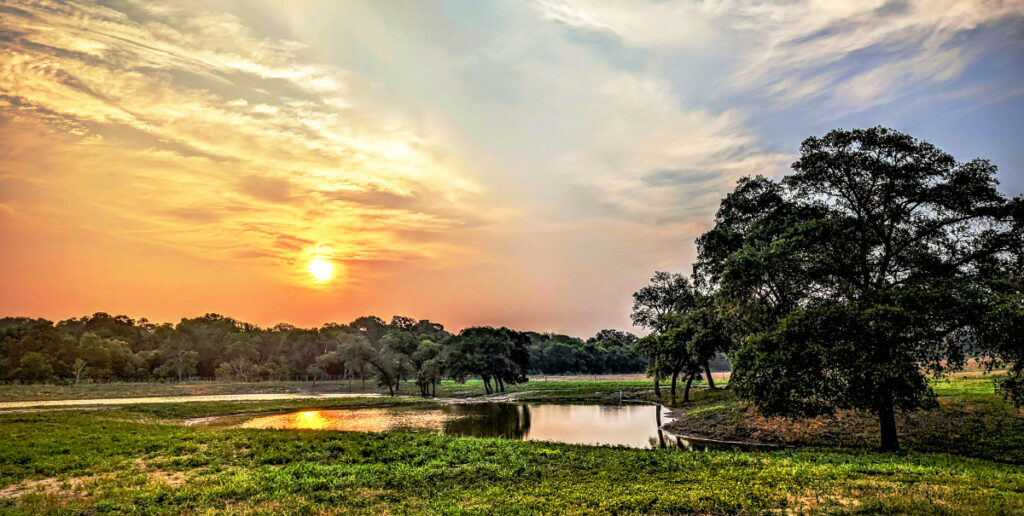
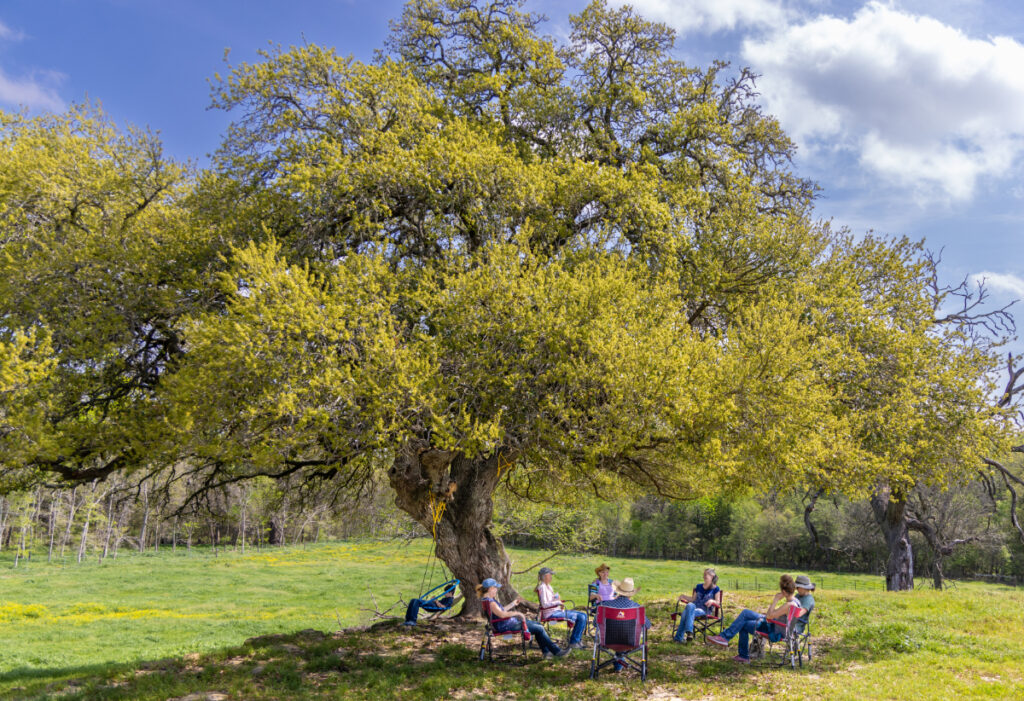
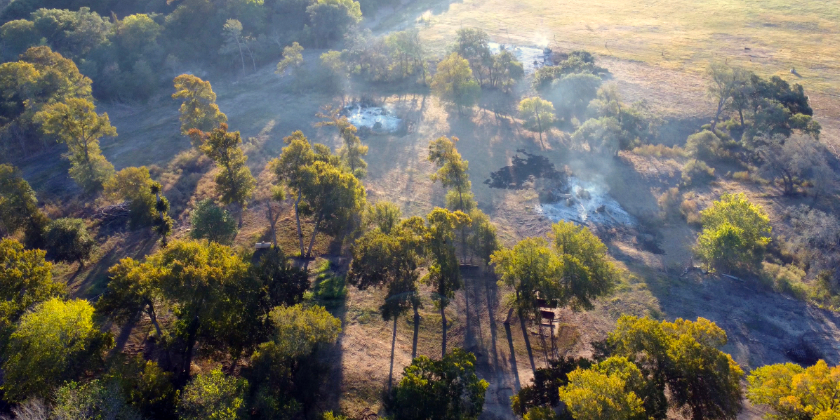
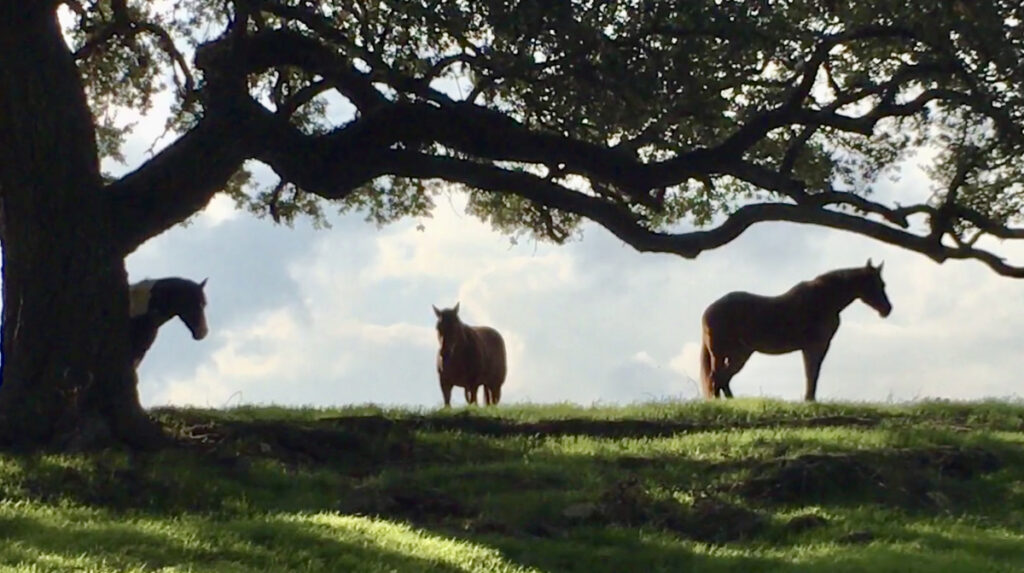
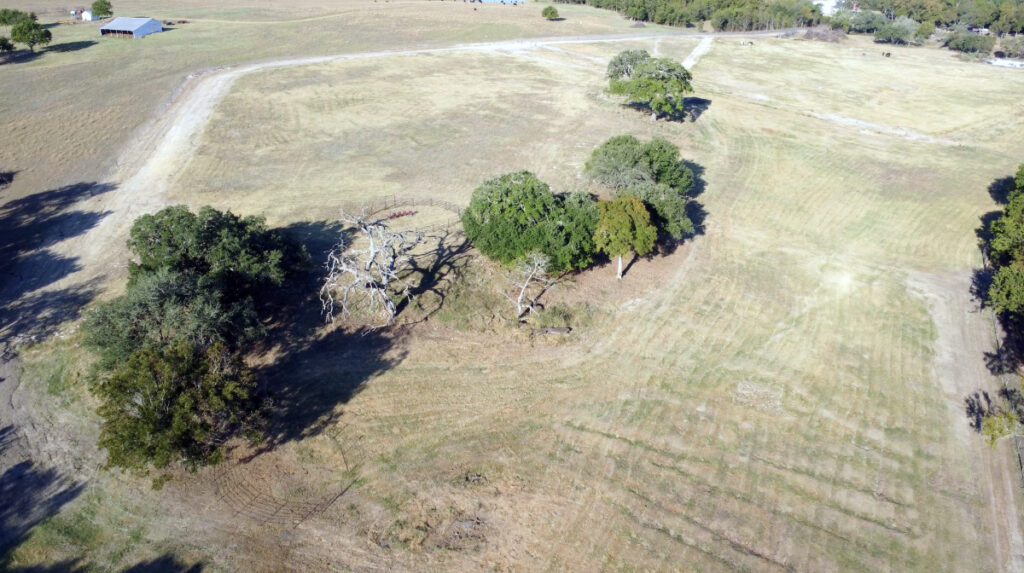
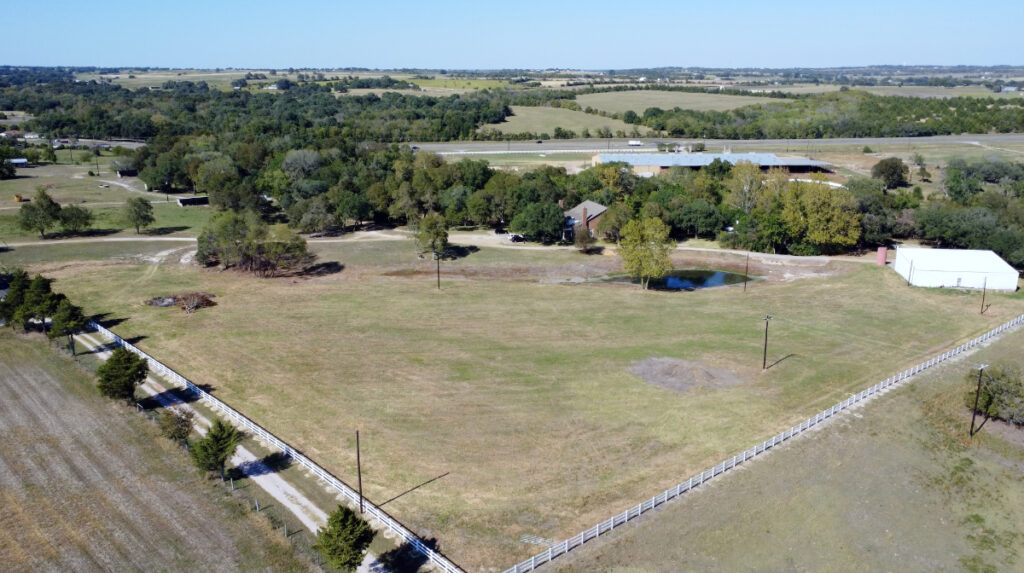
After a ton of searching, That’s the Dream Ranch, LLC closed on 73 acres just outside of Brenham, Texas in November of 2021. The most magical creek you have ever seen splits and borders the property. The main meeting place, with antique furniture and a wrap-around porch, overlooks a lovely pond and a hay pasture. The covered arena is straight up dreamy and is overlooked by a conference room, full of windows and too many chandeliers. A quaint 12 bedroom Inn is nestled up against the creek, and all I can say is that I am in love. All kinds of intelligent and majestic trees create little spaces all over the property that call us to come, and sit, and be.
However, there is plenty of work to be done, and so construction has been initiated to create a place for you–– a sacred and fertile place for healing, growth, change, and transcendence. This place will be all about experience and all about home––the kind of home you carry in your heart, that connects you to your core self–– a self that is part of the landscape you occupy, part of a larger body committed to making the world a better place.
Natural Lifemanship is a community with roots, and now we get to build a home. A place where you can find us, be with us. A place where we belong together.
The Healing of Place
Place has the power to do all kinds of amazing things, but with power comes great responsibility.
As clinicians, our personal healing is the foundation for doing healing work with others––the same is true of the land. Place has the power to be the beginning of new life if our love of place is fierce, so fierce that we will do the hard work of restoration. The hard work of healing.
With the help of That’s the Dream Ranch and in partnership with Leopold Land Management and the National Resources Conservation Service (a USDA agency) a major transformation is underway––demolition or repurposing of the things that no longer serve us, pruning, planting, and lots and lots of nurture. We are committed to the messiness and the absolute beauty of healing. We are committed to you.
At Natural Lifemanship, it has always been about a way of being in the world. About principles and values.
Therefore, we are building a place, a home, with the same intentions. Our place—guided by our values where connection is seen and felt in everything we do.
And in our place, we are preparing a place for you.