
For the Sake of Love: What the Christmas Story Teaches Us About Vulnerability

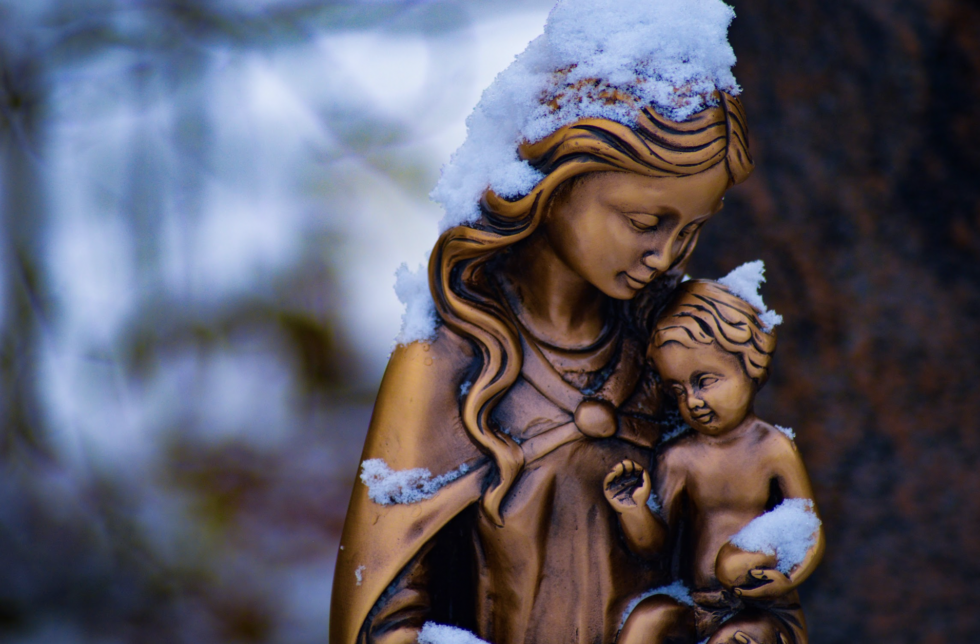
Christmas has always held me.
I love the lights, the music, the excess, the nostalgia. I love the way the season invites joy and grief to sit side by side without asking either one to leave. I love the familiar rituals and the childlike wonder, and the sacred and the commercial all tangled together.
I also love the story at the heart of it all because it speaks about what it means to bring something precious into the world and protect it with your life.
There are two experiences in my life that have shaped the way I understand this season—being pregnant and giving birth.
Loving Pregnancy, Knowing Labor
I loved being pregnant. Every part of it.
I loved the connection with my baby, and the sense of growing life inside my body. I loved the emotional openness of pregnancy, and the tears that came easily and without apology. Even when I lost weight during my first trimester because I could barely eat, I remember feeling grateful for every wave of it. It felt extraordinary to carry life, and to participate so intimately in creation.
Birth was different. It was hard in ways I was not prepared for. My first labor lasted fifty hours, and somewhere in the middle of it, it became unmistakably clear: there was no quitting and no going back. The only way out was through.
Childbirth is one of the few human experiences where control simply falls away. When it becomes overwhelming, there is no opting out and no negotiating a different path. You move through it, or you do not survive it. That reality is what makes birth so profoundly transformative.
And when choice gives way to surrender, I find myself thinking of Mary.
The Mary We Rarely See
Mary is often described as humble, meek, obedient, modest, and serene. She is usually portrayed as calm and composed, as if the physical reality of her experience were incidental to the story being told. I believe she was humble, and I believe she was faithful. But these portrayals tend to soften her story in ways that overlook the depth of what she endured and the strength required to carry it.
Some Christian traditions teach that Mary experienced no pain in childbirth, a belief shaped by centuries of theological interpretation. While meaningful within its context, this view can distance us from the lived reality of birth itself. It shifts the focus away from the effort, risk, and surrender involved in bringing new life into the world.
There is another image of Mary that appears far less often. It comes from Revelation 12, a passage rarely associated with Christmas. Here, Mary is depicted as a woman clothed with the sun, the moon beneath her feet, and a crown of stars upon her head. She is pregnant and crying out in pain as she gives birth, while a great dragon stands before her, threatening the life she carries. This is not a peaceful or sentimental scene. It is charged with danger, intensity, and fierce protection.
But this is the Mary I recognize – a woman in labor, exposed to risk, standing between harm and love.
Vulnerability That Demands Strength
Vulnerability is often misunderstood. It is frequently framed as openness without power, or exposure without protection. But the vulnerability Mary embodies is altogether different. It is the kind of vulnerability that requires strength.
Mary said yes to a calling that would cost her comfort, safety, and certainty. She carried that yes in her body. She rode a donkey nearly one hundred miles while nine months pregnant. She gave birth on the ground of a barn, a place where there’s dirt, hay, animals, and all kinds of filth. It offers no privacy and certainly no comfort.
Despite all that, she remained present, grounded, and devoted, meeting each moment as it came with a strength that did not harden her, but carried life forward.
God Chose Vulnerability
Jesus entered the world, not with force or certainty, but through dependency. He arrived as a newborn who could not survive without care. Just like any other human baby, the baby Jesus arrived utterly reliant on others. Just like any other baby, the baby Jesus needed to be held, fed, and protected. Most importantly, his survival depended entirely on relationship.
To come into the world as a child is to accept exposure, uncertainty, and risk from the very beginning. It is to trust that love will meet you where strength cannot. In this telling, vulnerability is not something to be avoided or overcome. It is the doorway through which life enters.
Mary’s role mirrors this same truth. She did not simply assent to an idea or belief. She agreed to carry vulnerability in her own body. She agreed to labor, to protect, to nurture, and to remain present through fear and uncertainty.
All these teach us that love does not arrive fully formed or self-sufficient. It comes into the world needing care. It grows through relationship. And it asks something real of those who say yes to it.
What It Takes to Birth Something
Whether you understand the Christmas story as history, parable, or sacred myth, it carries a truth that extends beyond belief systems: anything worth birthing requires vulnerability.
Children. Ideas. Healing work. Businesses. Relationships. Movements.
All of them ask us to step into uncertainty…
… to accept risk
…to remain present when things become uncomfortable or frightening; and
…to understand that there is no meaningful creation without some form of labor.
In this field, each one of us is called to give birth to something. We do this work because we have said yes to something larger than ourselves. That yes asks us to stay engaged when the cost becomes clear, when the path narrows, and when the only way forward is through.
This Season That Asks Us to Remember
This is what I believe the Christmas story offers us:
Love involves risk. Creation involves labor. Vulnerability and strength are not opposites. They are inseparable.
Mary was gentle, but formidable. She was faithful, but also fierce.
This season invites us to see vulnerability more clearly. Not as fragility, but as love lived through the body, through risk, and through devotion.
However you hold this story, may it remind you of what it truly takes to birth something meaningful, to protect it, and to nurture it into the world. And may it help you honor the strength required to stay present with what you love, even when the path forward demands everything you have.
Happy Holidays, and may you find peace in the love you are carrying and tending this season and beyond.